Hugo Ludwig · 12 November 2026
Referral Network Innovations Supporting Independent Content Sites Amid Algorithm Fluctuations
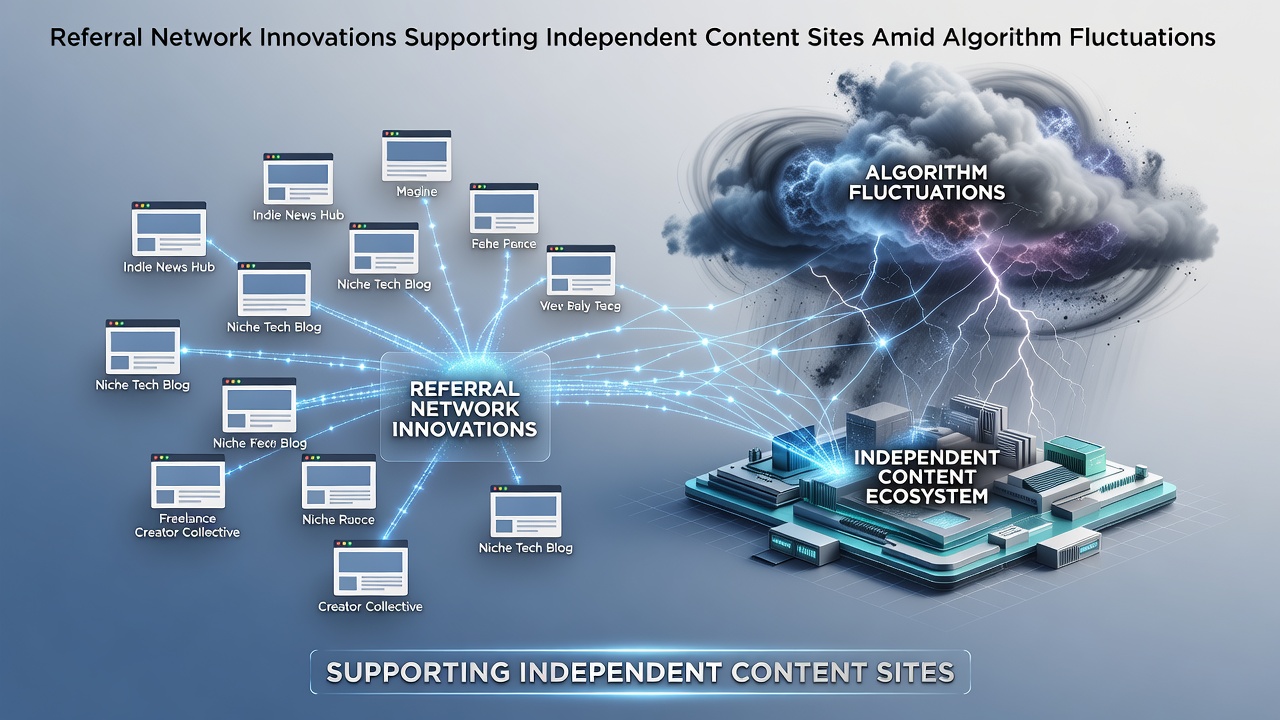
Independent content sites encounter ongoing shifts in search visibility due to frequent algorithm updates, and referral network innovations have emerged as structured systems that facilitate targeted traffic exchanges between niche publishers, whereas traditional link acquisition methods face increased scrutiny from search engines. These networks operate through specialized platforms that match sites based on content relevance, audience overlap, and thematic alignment, creating pathways that bypass direct dependency on organic rankings alone.
Core Mechanisms Behind Modern Referral Systems
Referral networks function by establishing reciprocal or one-way traffic agreements among participating sites, and data from industry analyses shows that such arrangements deliver measurable referral volumes when search conditions change abruptly. Platforms supporting these networks incorporate automated matching algorithms that analyze site metrics including domain authority, topical focus, and historical traffic patterns, while integration with analytics tools allows participants to track conversion rates and engagement quality in real time. Researchers have documented cases where sites using these systems maintained steady visitor inflows during periods of ranking volatility, particularly when combined with diversified content distribution strategies.
Technical advancements include API-driven connections that enable seamless referral tracking without manual intervention, and these tools often feature compliance layers that align with data protection standards across multiple jurisdictions. Observers note that networks emphasizing quality over quantity have reported higher retention rates, as mismatched referrals tend to produce lower engagement metrics according to aggregated performance reports.
Response to Algorithm Changes in Late 2026
Algorithm fluctuations observed through November 2026 prompted many independent operators to accelerate adoption of referral frameworks, since search engine adjustments frequently prioritize established authority signals that newer or smaller sites struggle to accumulate quickly. Industry reports indicate that referral volumes through specialized platforms increased by double-digit percentages in affected sectors during those months, with particular emphasis on entertainment, education, and local interest verticals. These shifts occurred alongside broader regulatory discussions on digital platform practices, including statements from the European Commission on fair access to online visibility tools.
Independent sites that integrated referral protocols early recorded more stable monthly active user figures compared to those relying solely on search traffic, while case examples from Australian digital media studies reveal similar patterns where cross-site referral agreements buffered against sudden ranking drops. The systems often incorporate tiered participation levels, allowing emerging sites to start with smaller exchanges before scaling to larger networks as performance data accumulates.

Platform Features Driving Adoption
Contemporary referral platforms offer dashboard interfaces that display real-time referral sources, bounce rates, and downstream conversion data, enabling site managers to refine participation criteria without extensive technical expertise. Features such as automated quality scoring and audience demographic matching reduce the administrative burden, and studies from research institutions including those affiliated with the OECD have highlighted efficiency gains in traffic diversification for participating publishers. Security protocols within these platforms typically include verification processes for partner sites, reducing risks associated with low-quality or fraudulent referrals.
Geographic targeting options allow networks to prioritize regional relevance, which proves useful when algorithm updates incorporate stronger location-based signals. Data indicates that sites leveraging these localized referral options experienced improved session durations, as referred visitors arrived with higher intent alignment than generic search traffic sometimes provides.
Integration With Broader Traffic Strategies
Referral networks complement rather than replace other acquisition channels, and successful implementations combine them with email lists, social distribution, and curated content partnerships. Those managing multiple independent sites often report that centralized referral management consoles streamline oversight across portfolios, allowing quick adjustments when performance indicators shift. Reports from academic sources on digital media sustainability emphasize that diversified inbound pathways correlate with greater operational resilience during periods of search engine recalibration.
Participation guidelines within leading networks frequently require adherence to content quality benchmarks, which helps maintain overall ecosystem integrity and reduces exposure to penalties that might arise from association with low-value sources. Tracking mechanisms built into these platforms support attribution modeling that distinguishes referral contributions from other traffic origins, providing clearer insights for resource allocation decisions.
Conclusion
Referral network innovations continue to evolve in response to the demands of independent content sites navigating algorithm fluctuations, with platform capabilities expanding to include more sophisticated matching, tracking, and compliance features. Evidence from multiple regions demonstrates that these systems supply measurable traffic alternatives during visibility disruptions, supporting sustained operations for sites that integrate them thoughtfully alongside existing distribution methods. As search conditions remain dynamic, the infrastructure supporting these referral pathways provides structured options for maintaining audience connections without sole reliance on any single acquisition channel.